Technische Keramik
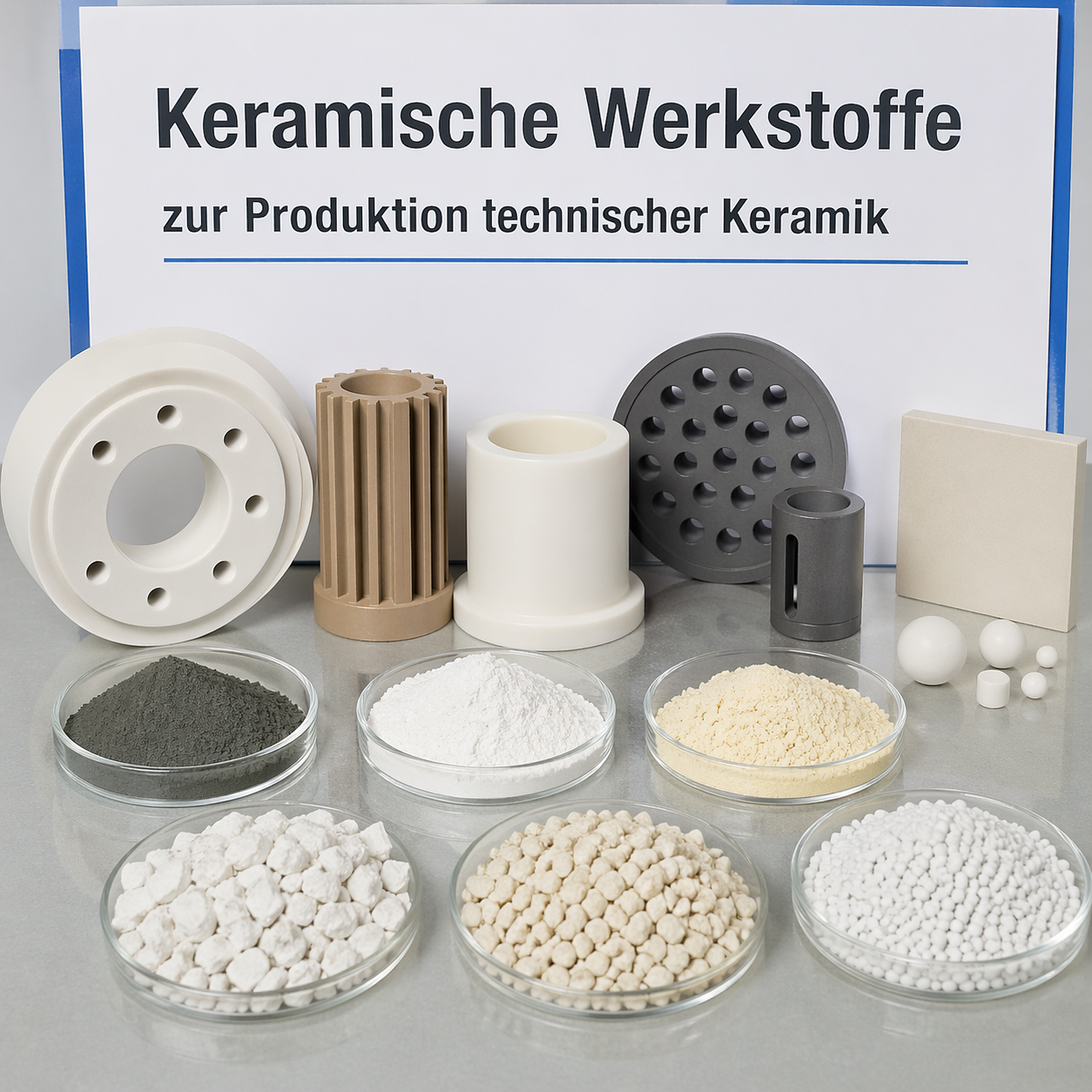
Keramik Werkstoffe
Im Zeitalter von Technologien, die stets steigende Ansprüche an keramik Werkstoffe stellen, stoßen traditionelle Materialien, z.B. viele Metalle oder Kunststoffe, an ihre Grenzen. Die Eigenschaften technischer Keramik rücken hier immer häufiger in den Fokus, wenn bei Anwendungen höchste Ansprüche gestellt werden. Die chemische Beständigkeit, Temperaturfestigkeit, oder viele andere Eigenschaften der technischen Keramik ermöglichen manche Applikationen erst, oder sorgen in anderen für eine erhöhte Lebensdauer. In diesem Fall werden zunächst möglicherweise höhere Beschaffungskosten in der Regel über verlängerte Betriebszeiten um das mehrfache wieder erwirtschaftet (Total Cost of Ownership).
Zirkonoxid (ZrO2)
Zirkonoxid eignet sich wegen seiner guten tribologischen Eigenschaften besonders für den Einsatz im Bereich der rollenden Bewegungen, wie in Linearführungen oder Wälzlagern. Die hohe Bruchzähigkeit, die Wärmeausdehnung ähnlich dem von Stählen, höchste Biegebruchfestigkeit, sehr gute Verschleiß- und Korrosionsbeständigkeit bei gleichzeitig niedriger Wärmeleitfähigkeit zeichnen diesen Werkstoff aus. Auch als Gleitlagerwerkstoff ist Zirkonoxid besonders geeignet.
Siliziumnitrid (Si3N4) (SN)
Siliziumnitride werden von uns bevorzugt für den Einsatz als Wälzkörper verwendet. Sie werden bereits seit Jahrzehnten in Wälzlagern verwendet und haben sich dort bewährt. Die extrem hohe mechanische Festigkeit sowie seine exzellente thermische, korrosive und abrasive Beständigkeit sind der Grund für den Einsatz in einer Vielzahl von hochbelastenden Anwendungen.
Aluminiumoxid (AI2O3)
Aluminiumoxid ist der bekannteste und am weitesten verbreitete keramische Werkstoff. Er zeichnet sich durch hohe Festigkeit und Härte, Temperaturstabilität und Korrosionsbeständigkeit aus, wie auch hohe Verschleißbeständigkeit im Gleitlagerbereich. Im Bereich der rollenden Bewegungen, wie Linearführungen und Wälzlagern, empfehlen wir diesen Werkstoff nicht, weil er tribologisch ungünstig ist.